
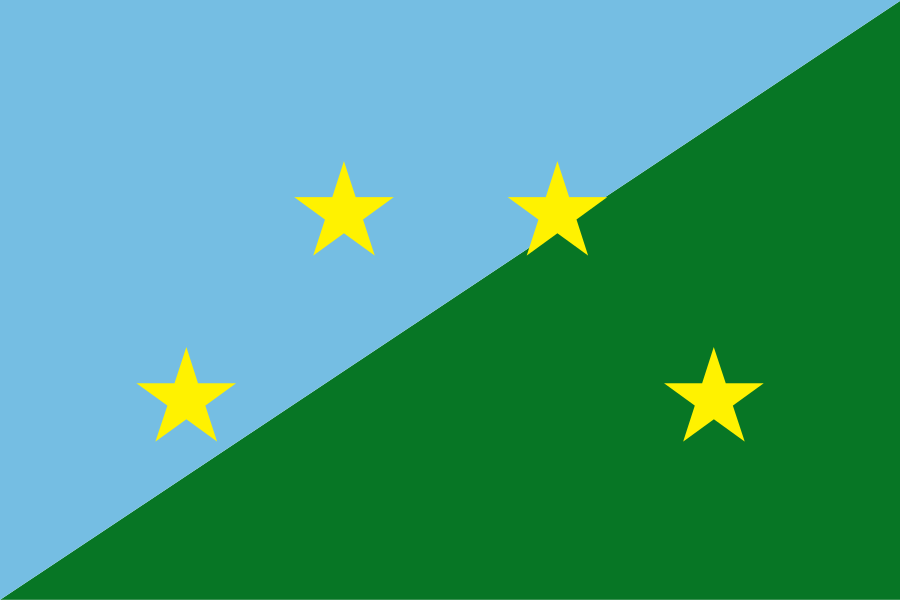
 Province
History
Darién's position between Central and South America made it, for thousands of years, a key territory for the movement of species and human populations. The Emberá, Wounaan and Guna peoples maintain their own knowledge and forms of organization to this day, making this history a living reality. At the beginning of the sixteenth century, the historical Darién region became one of the first settings of Spanish expansion on the American mainland: Santa María la Antigua del Darién was established in 1510, in territory now part of Colombia. Colonial control, however, remained uneven, shaped by geography, distance and local resistance, and settlement stayed closely tied to rivers, small communities and the coast. In 1855, the Comarca of Darién was created with Yaviza as its administrative center, transferred to Chepigana in 1890. The modern province was created by Law No. 22 of December 27, 1922, organized into the districts of Chepigana and Pinogana with La Palma as its capital. Darién National Park was established in 1980 and inscribed on the UNESCO World Heritage List the following year for its extraordinary diversity of ecosystems. Its forests maintain ecological continuity with protected territories in Colombia. Today, the province faces the challenge of combining conservation and development in one of the country's most complex and biodiverse territories.