
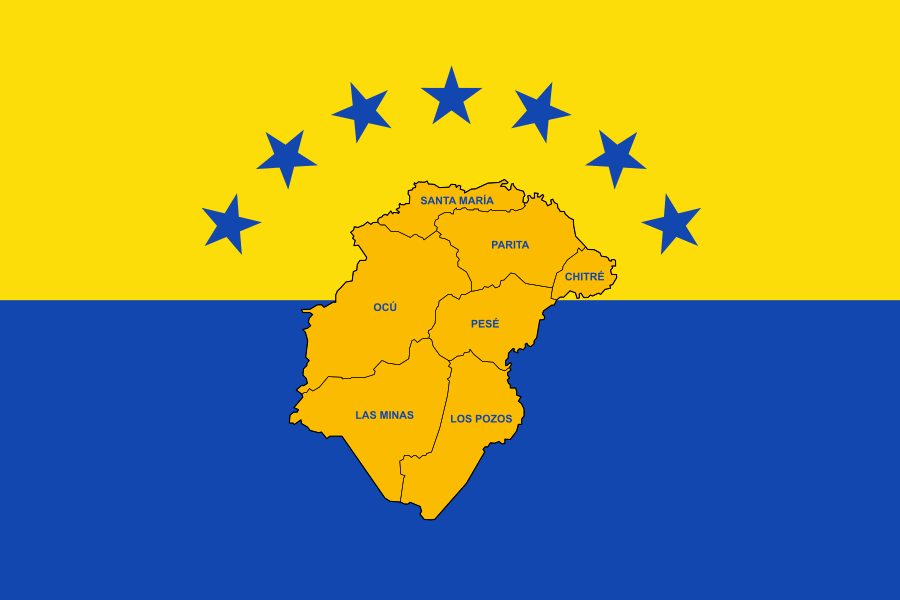
 Province
History
Herrera's history began long before its administrative creation: the Sarigua region preserves archaeological evidence of ancient pre-Hispanic settlements devoted to fishing and agriculture. During the colonial period, settlements such as Parita organized the interior of the peninsula; its Church of Santo Domingo de Guzmán, originally built in the seventeenth century, is one of the main records of that era. In the following centuries, communities developed economies based on agriculture, cattle raising and craftsmanship. La Arena became a center for pottery and ceramics, while Ocú built a strong rural and folkloric identity now expressed in the National Festival of the Manito. Modern organization arrived in the twentieth century: Law No. 55 of December 30, 1914 created the Province of Azuero with Chitré as its capital, and Law No. 17 of January 18, 1915 renamed it the Province of Herrera. Chitré grew into a commercial, educational and service center for much of the Azuero Peninsula. In recent decades, natural heritage protection gained prominence: Sarigua National Park was created in 1984 to protect coastal ecosystems, salt flats and archaeological sites, and areas such as El Montoso Forest Reserve and Ciénaga de Las Macanas broadened the view of a province whose heritage is both cultural and ecological.