
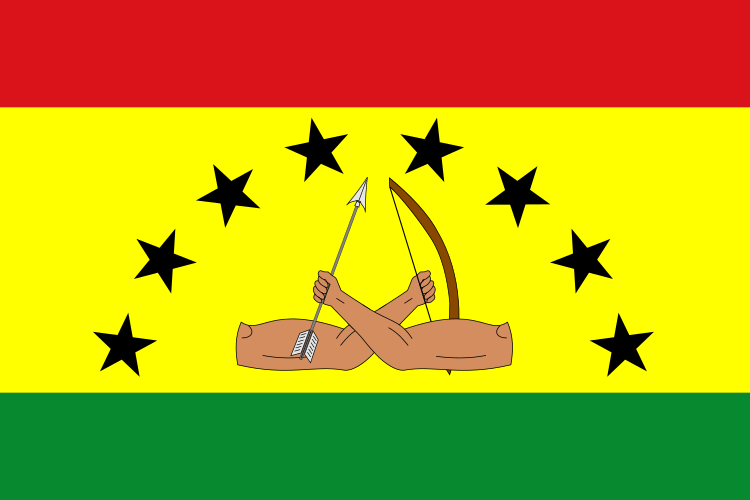
 Comarca
History
The history of Gunayala belongs to the broader history of the Guna people, whose communities have inhabited territories in Darién, Panama's Caribbean coast and regions now in Colombia since before today's borders. In 1870, under Colombian administration, the Comarca of Tulenega was created, a legal precedent for Guna territorial recognition. After Panama's separation in 1903, tensions with the new state — including attempts to change customs and ways of life — led in 1925 to the Dule Revolution, a decisive defense of the dignity and self-organization of the Guna people. The Comarca of San Blas was created in 1938, and Law 16 of 1953 developed its organization. The territory is governed through general and local congresses, with saglas as community authorities. In 1998, the comarca was renamed Kuna Yala and, through Law 536 of June 18, 2026, the state established Gunayala as its official name. The Fundamental Law reserves tourism activity for the Guna people and promotes sustainable, ecologically oriented tourism. In 2023, the program of Armila's Sea Turtle Festival was recognized by UNESCO as a good safeguarding practice. Facing sea-level rise, the relocation of families from Gardi Sugdub to Isberyala in 2024 became Panama's most visible example of climate adaptation.