History
The history of Bajo Boquete is closely tied to the district's development as an agricultural mountain region. Its location within the valley encouraged the growth of an urban center that brought together services, commerce, and gathering spaces for nearby communities.
Coffee farming became a defining part of the area's economy and tourism identity. Mountain conditions supported farms cultivating several coffee varieties, an activity that later expanded into tours, tastings, and educational experiences. Although many of these farms are outside central Bajo Boquete, the town serves as the main gateway for visiting them.
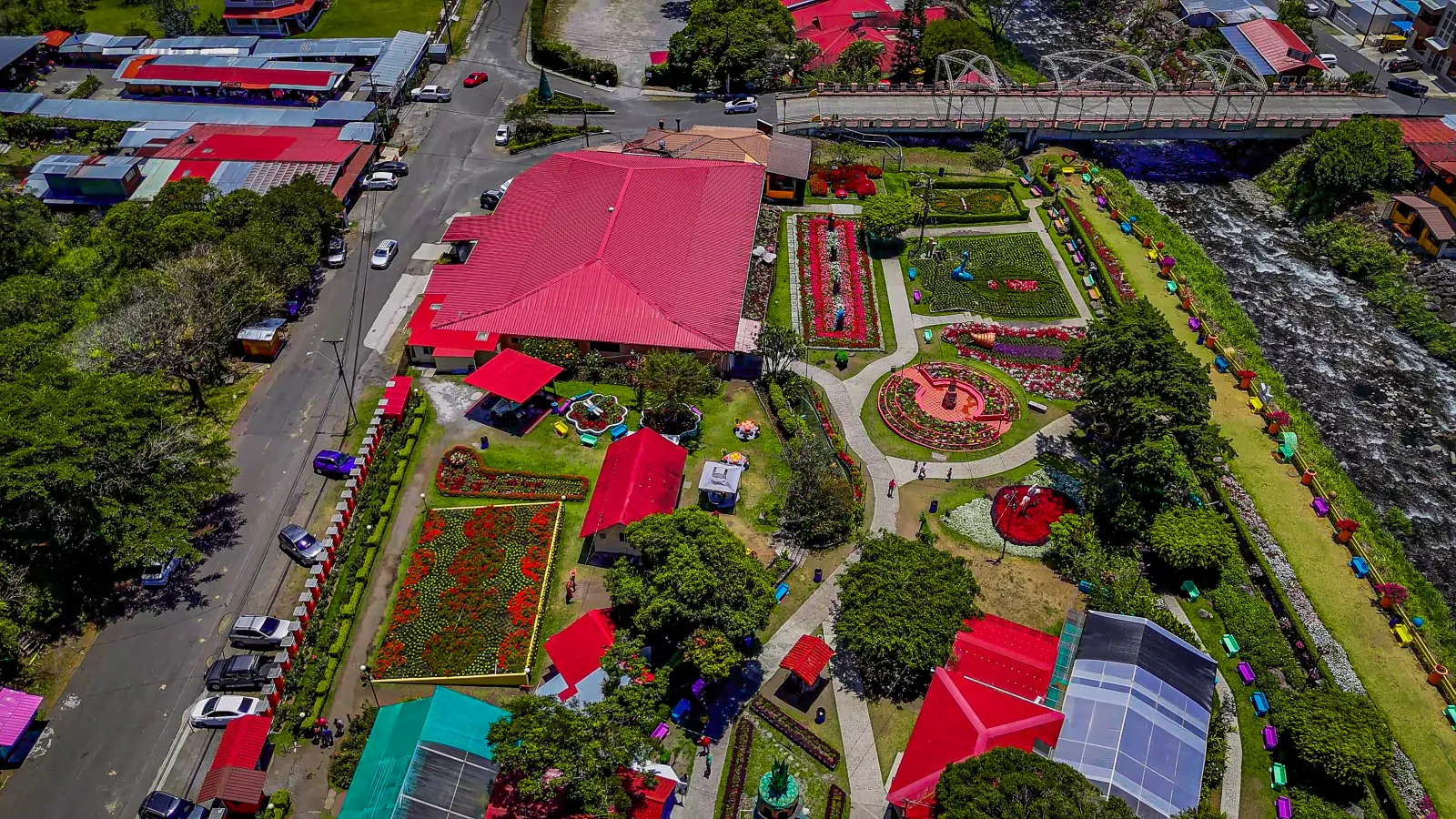
Flower production, agriculture, and the growth of tourism services have also shaped the town's contemporary character. The annual Flower and Coffee Fair reflects the relationship between local production, community celebration, and tourism, although dates, admission fees, and programming must be confirmed for each edition.
Culture
The cultural life of Bajo Boquete can be seen in the way the town brings together residents, producers, workers, and visitors. The central park and surrounding streets serve as gathering places, while coffee shops, restaurants, and small businesses connect tourism with locally rooted products and services.
Coffee holds a visible place in this identity. In town, it appears as a beverage, an agricultural product, and an introduction to the work carried out on farms throughout the district. Local dining also incorporates ingredients grown in the Chiriquí highlands, although specific offerings vary by establishment.
The Flower and Coffee Fair is one of the best-known public expressions of the local calendar. It highlights Boquete's connection with horticulture and coffee farming, but it does not define the town's entire cultural life. Throughout the rest of the year, Bajo Boquete maintains an everyday rhythm of commerce, services, and community interaction that remains an essential part of the visit.
Climate
The mountain setting gives Bajo Boquete a cooler feel than the lowlands of Chiriquí. Mist, clouds, and bajareque—a fine windblown drizzle—may appear even without heavy rainfall.
Conditions can change during the day. A clear morning may give way to humidity, drizzle, or rain, so carrying a light waterproof layer and protecting electronic devices is advisable. After rainfall, surfaces may remain wet, and trips toward rural areas or trails may require additional precautions.
Visiting the town does not depend on a single season, but weather conditions affect walking, mountain views, and excursions scheduled outside the urban center.
Area and surroundings
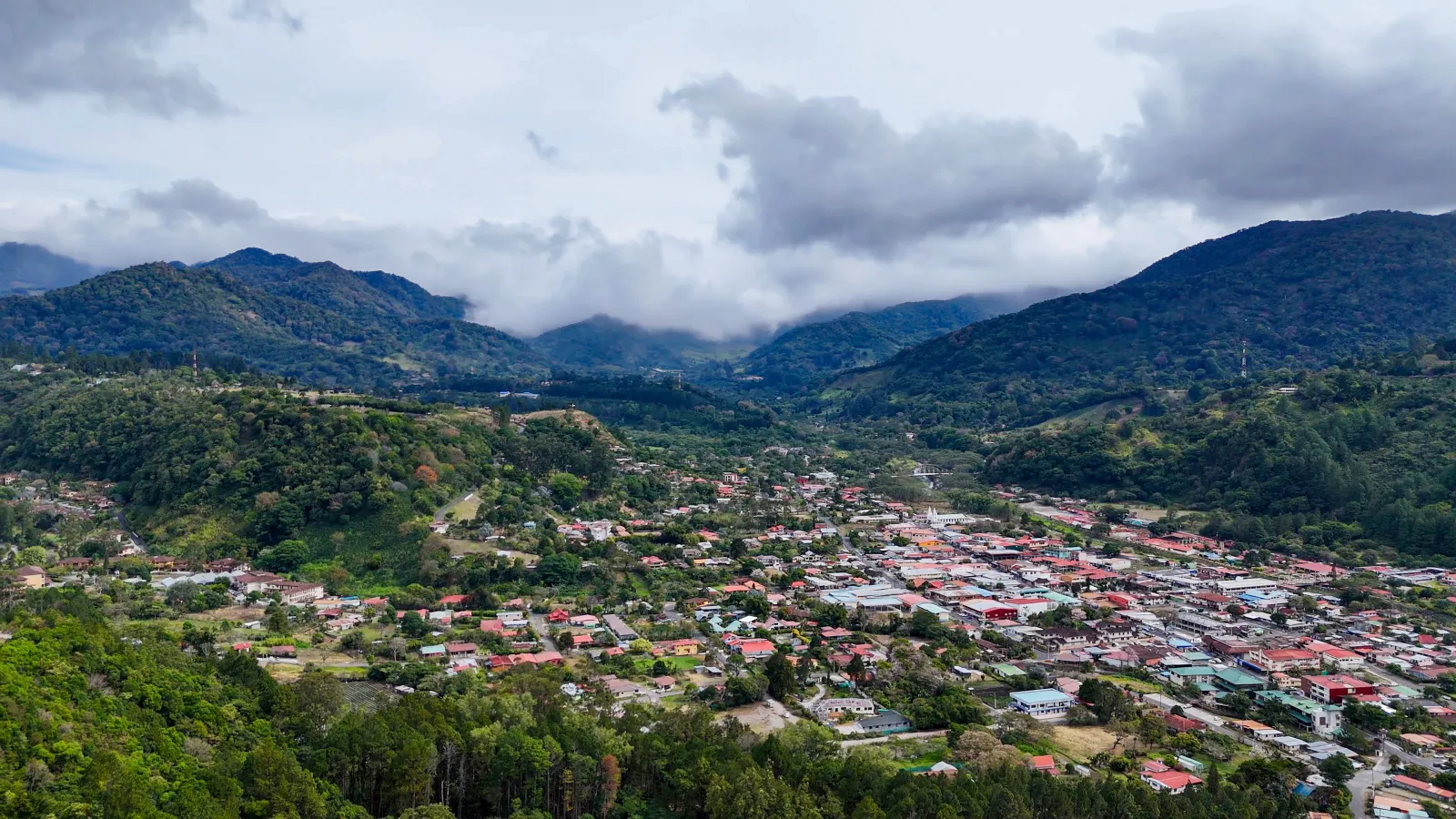
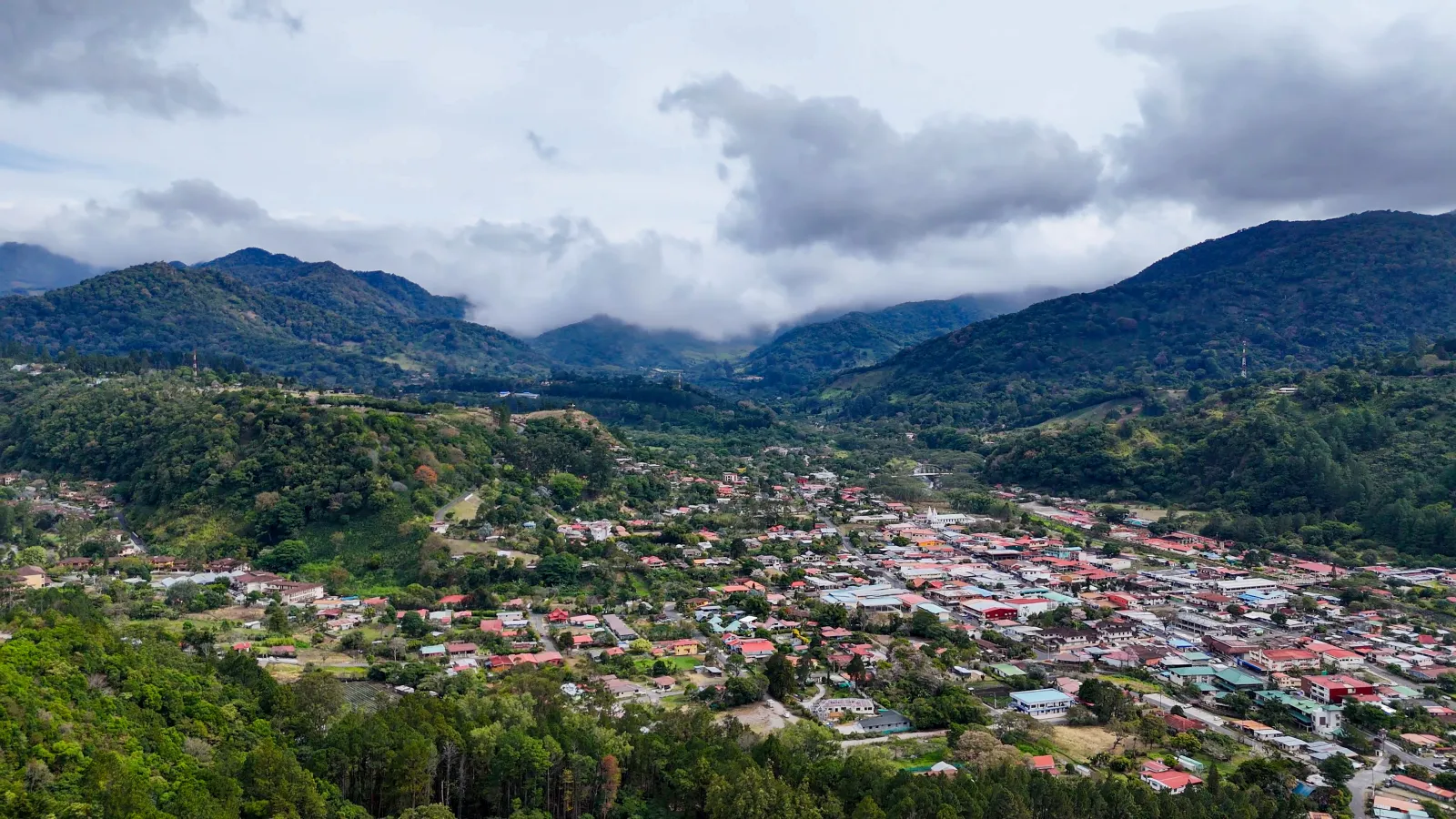
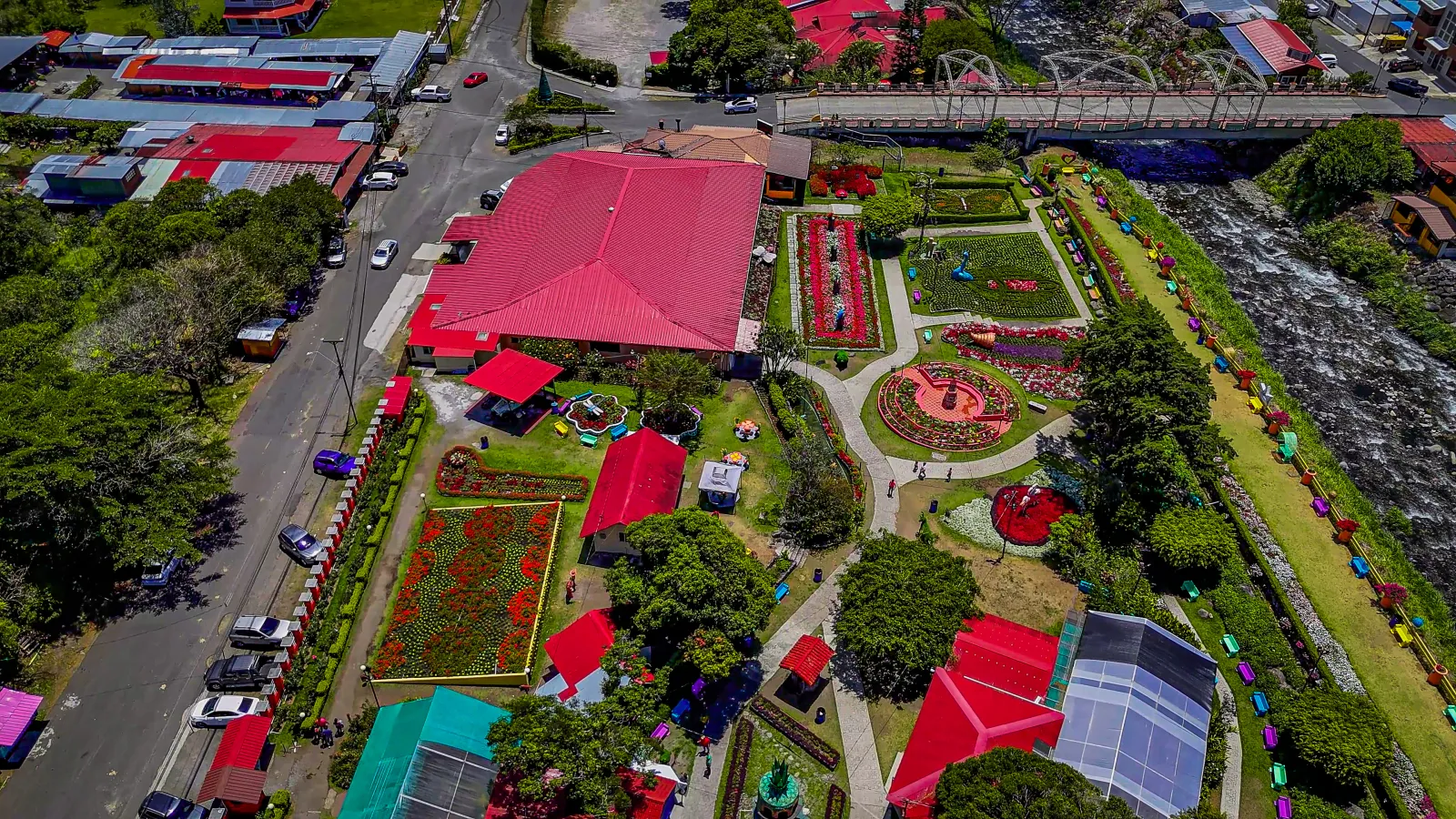
Bajo Boquete forms the district's main urban center and extends alongside the Caldera River within a valley surrounded by mountains. The central area contains the town park, shops, restaurants, coffee houses, lodging, and services used by both residents and visitors.
The town acts as a connection point for other parts of the district, including Los Naranjos, Jaramillo, Alto Boquete, Palmira, and Caldera. Coffee farms, waterfalls, gardens, trails, and protected-area access points are not all located within the urban center, even though they are often promoted under the broader name of Boquete.
This layout makes it possible to combine a relaxed visit to town with separate mountain excursions. To avoid confusion, each attraction outside the center should be checked individually, especially regarding transportation, reservations, operating hours, and access conditions.
Nature
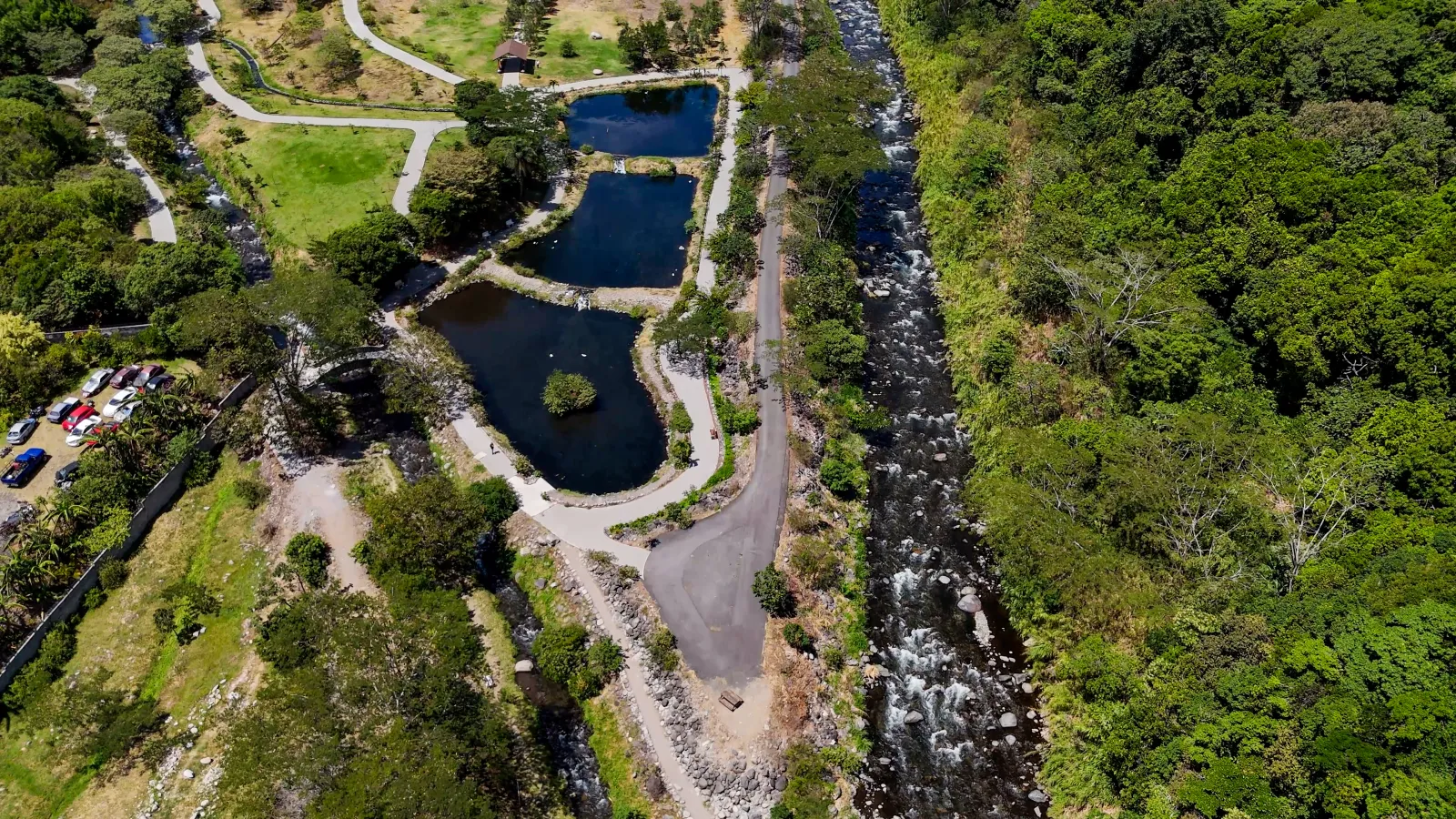
In Bajo Boquete, nature is not limited to distant scenery. The Caldera River passes through the urban setting, mountains frame the streets, and gardens, trees, and green spaces keep the town's relationship with its valley visible.
This landscape provides an introduction to the mountain ecosystems surrounding the district, but it should not be confused with protected areas, forests, or trails located outside town. Birdwatching and other wildlife experiences are part of Boquete's broader tourism offering; within Bajo Boquete, any sighting depends on the place, time, and conditions of the visit.
The town's natural value lies in the everyday proximity between its urban spaces, the river, and the mountains. Even a walk through the center reveals how Bajo Boquete's identity has developed in constant dialogue with the surrounding landscape.