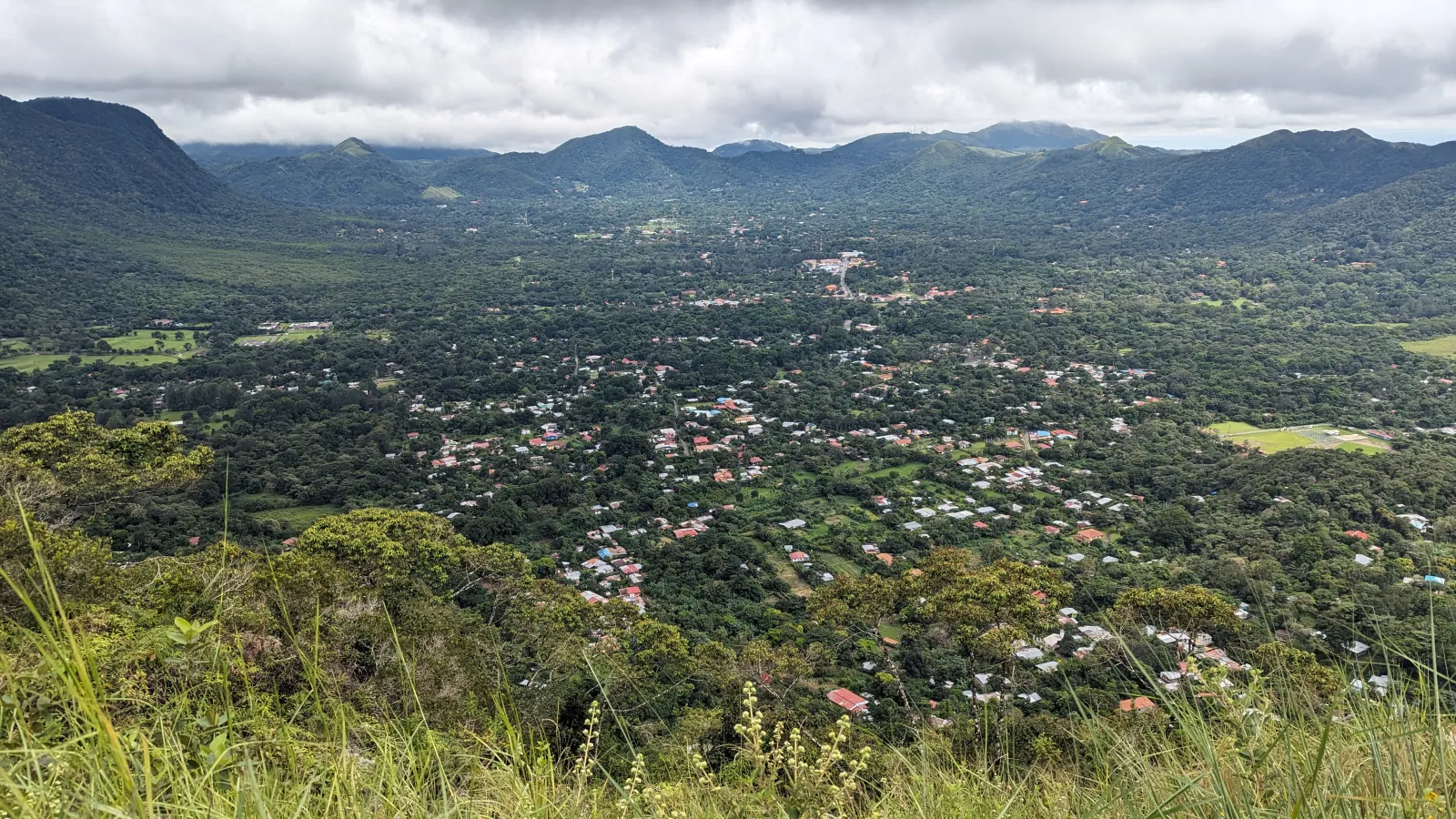
 Province


History
The history of Coclé began thousands of years before the modern province. Central Panama was home to complex Indigenous societies capable of producing elaborate ceramics, working metals and organizing funerary ceremonies that reflected rank and power. Their most important record is El Caño, in the district of Natá: a necropolis and ceremonial center active roughly between AD 700 and 1000, where excavations have uncovered multiple burials, ceramics and rich funerary collections including gold artifacts. Spanish colonization transformed the territory. Natá de los Caballeros, founded in 1522, became one of the earliest permanent Spanish settlements on the Pacific coast of the Americas and a key base for colonial expansion across the isthmus. Over the following centuries, the region developed an economy of agriculture, cattle raising and craftsmanship: Aguadulce became tied to sugarcane and salt production, while communities around La Pintada preserved the weaving knowledge behind the traditional pintao hat. The province was created as a department on September 12, 1855 and received its definitive name through Decree No. 190 of October 20, 1886, with Penonomé as its administrative center. During the twentieth and twenty-first centuries, the coast developed hotel activity, El Valle de Antón became one of the country's leading mountain destinations, and archaeological research and craft traditions strengthened Coclé's identity.