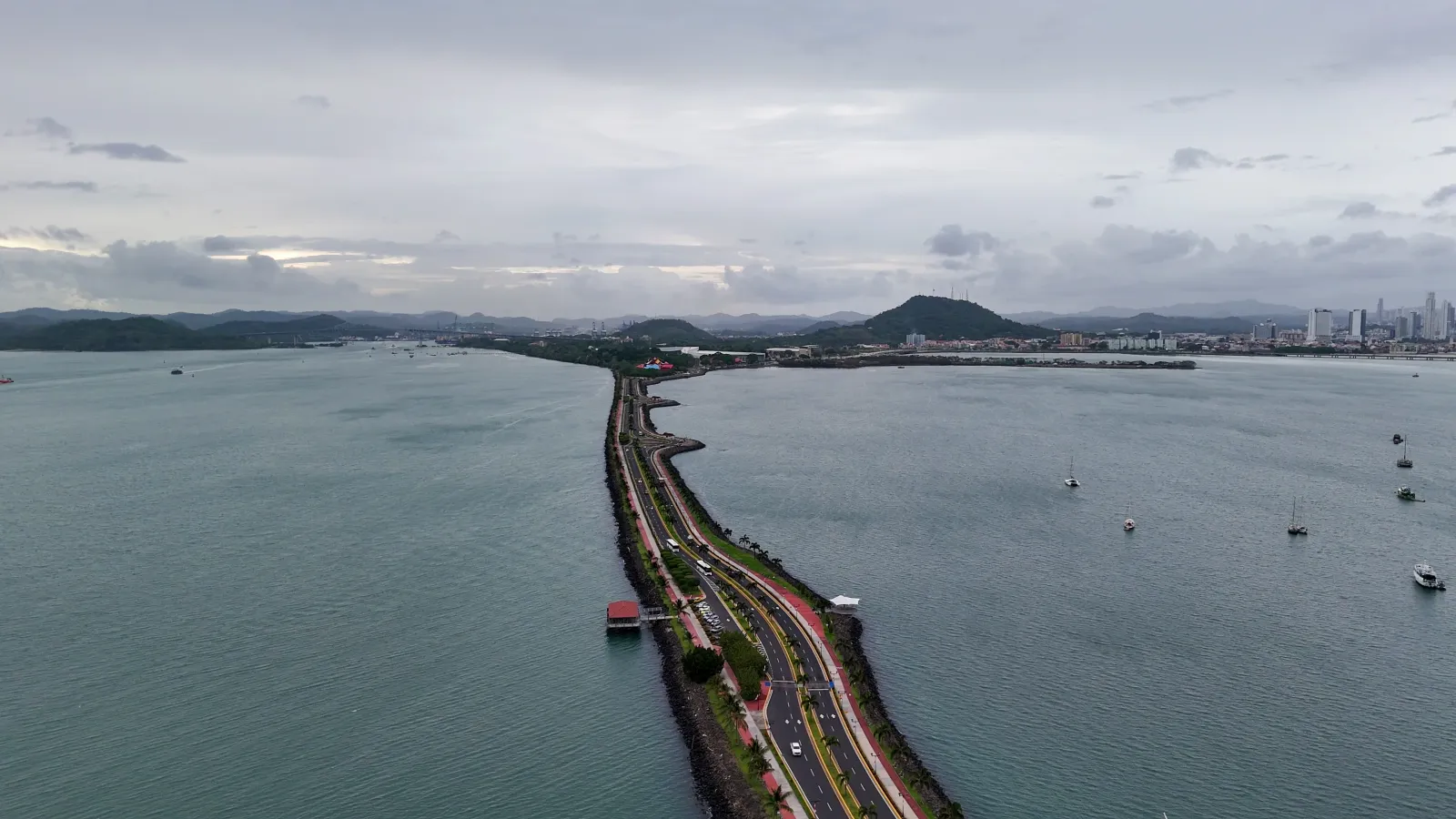
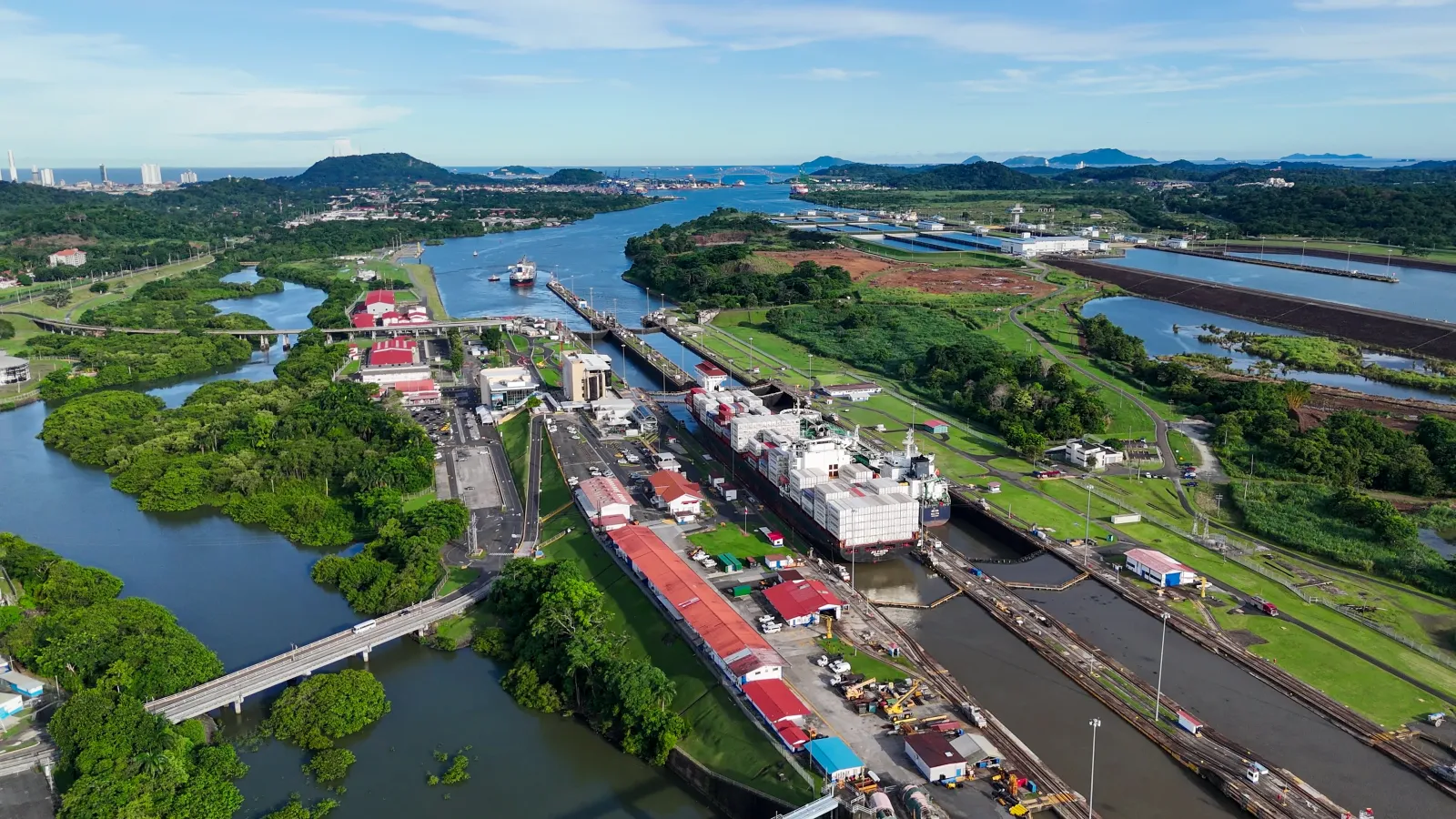
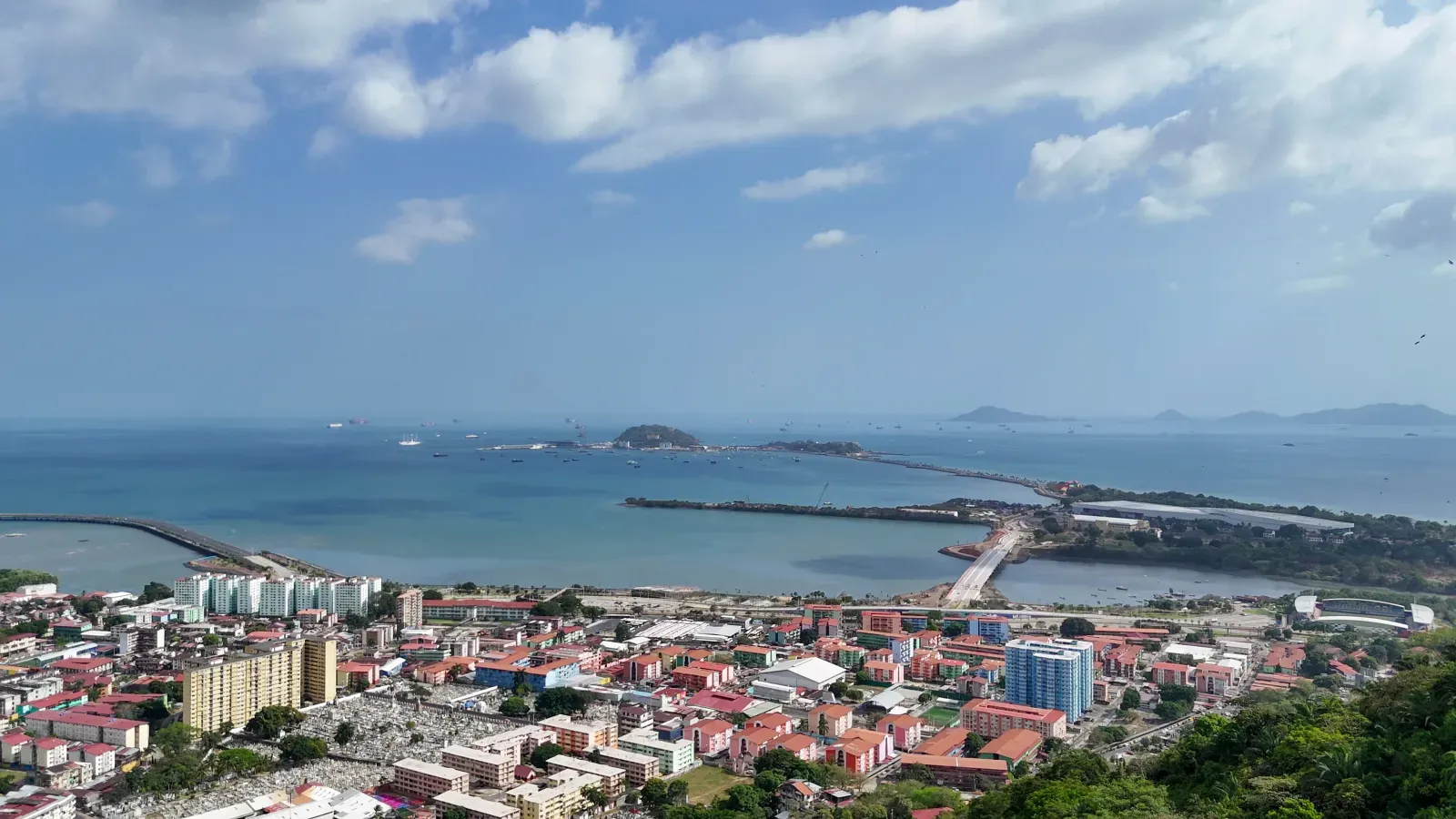
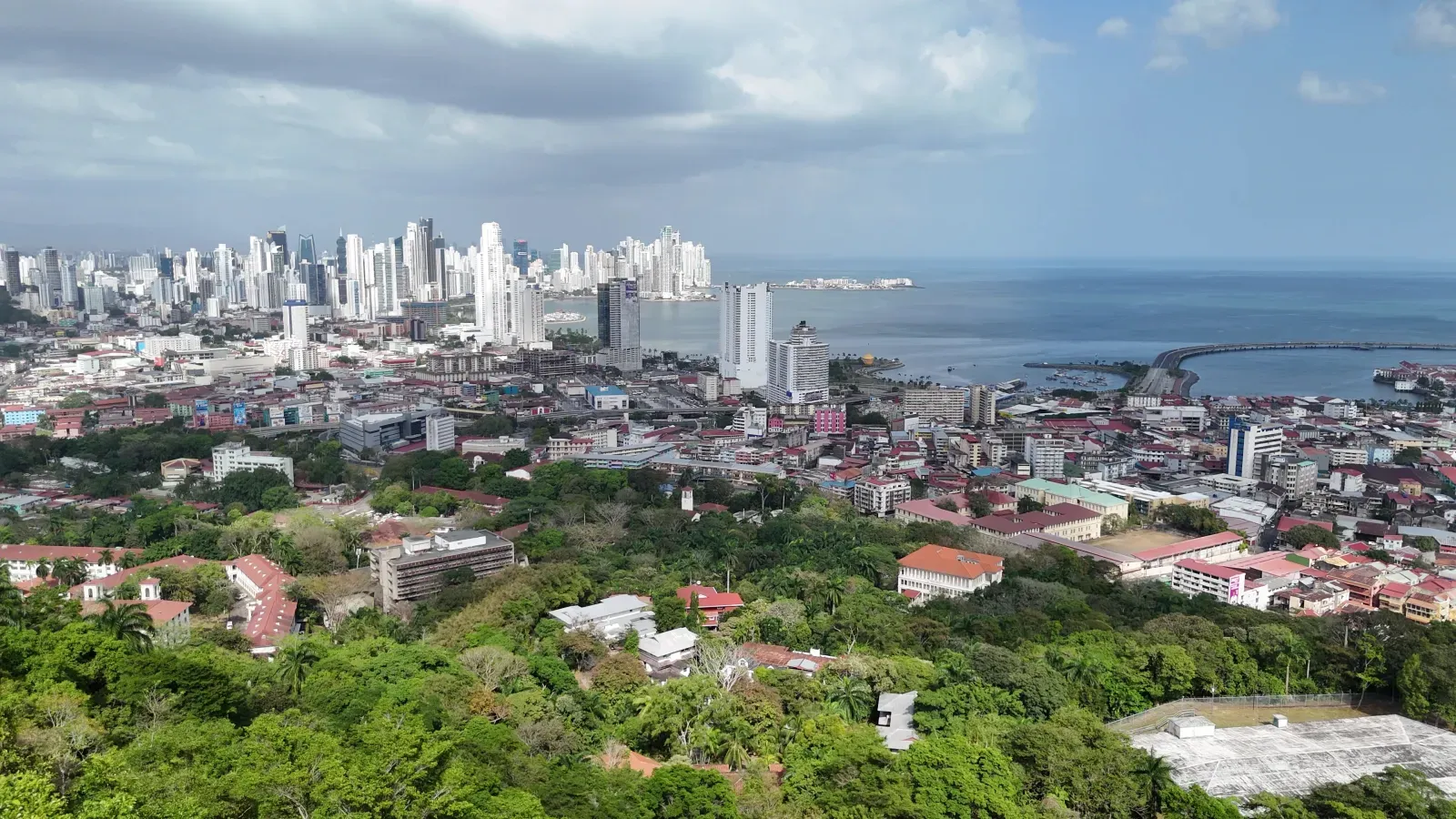
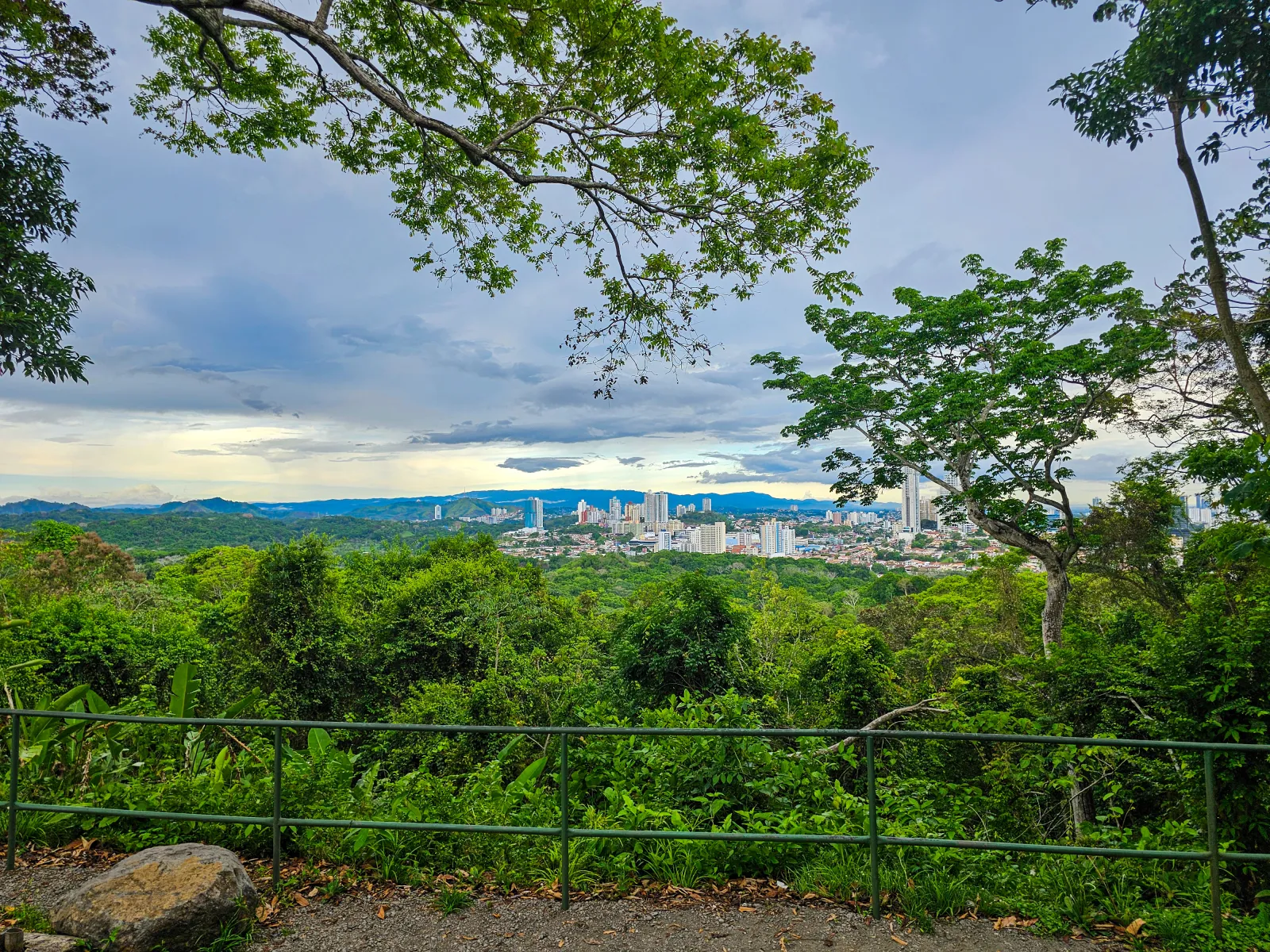
The city gradually falls away as the road climbs through trees, birdsong, and openings that reveal fragments of the urban landscape. Ancón Hill offers an unusual transition within the capital: in only a short distance, traffic noise gives way to tropical forest overlooking Casco Antiguo, the modern skyline, Balboa Port, and the Pacific entrance to the Panama Canal.
The main route follows a paved road that curves around the hill toward the summit. Although the walk is officially described as low difficulty, it involves a steady uphill climb. Sloths, agoutis, monkeys, deer, armadillos, toucans, and other birds may appear along the way, but wildlife sightings always depend on natural activity and timing.
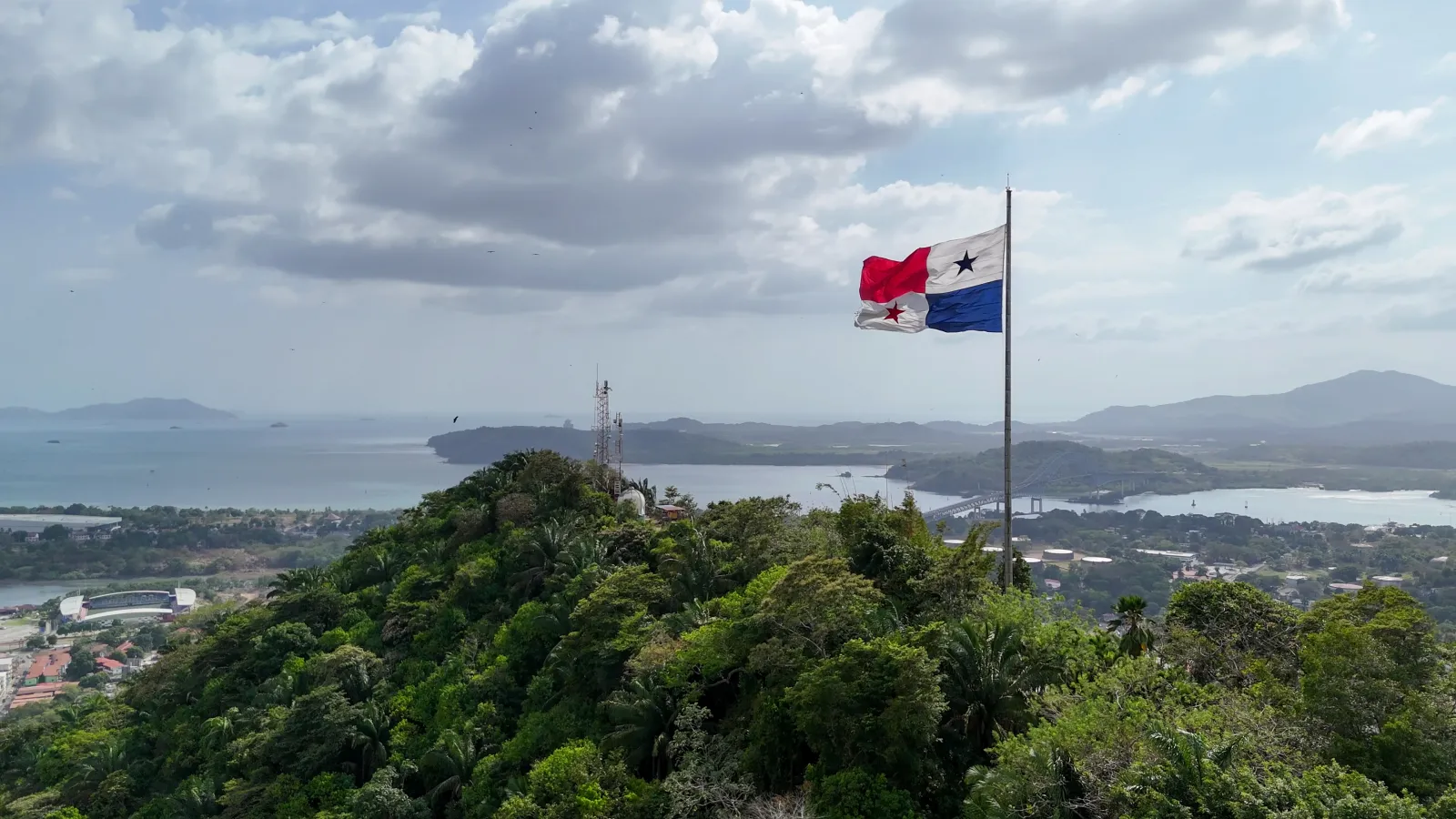
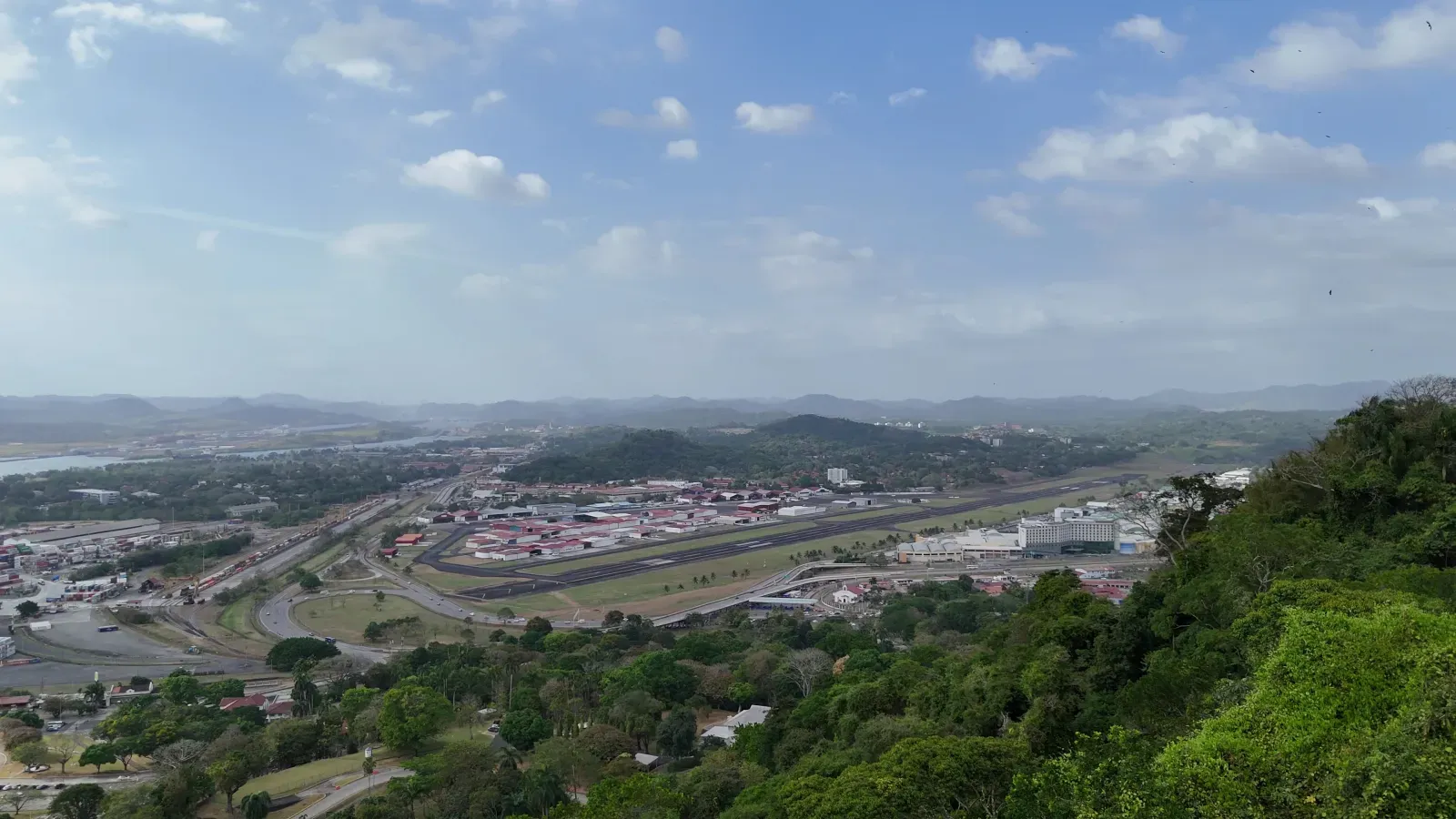
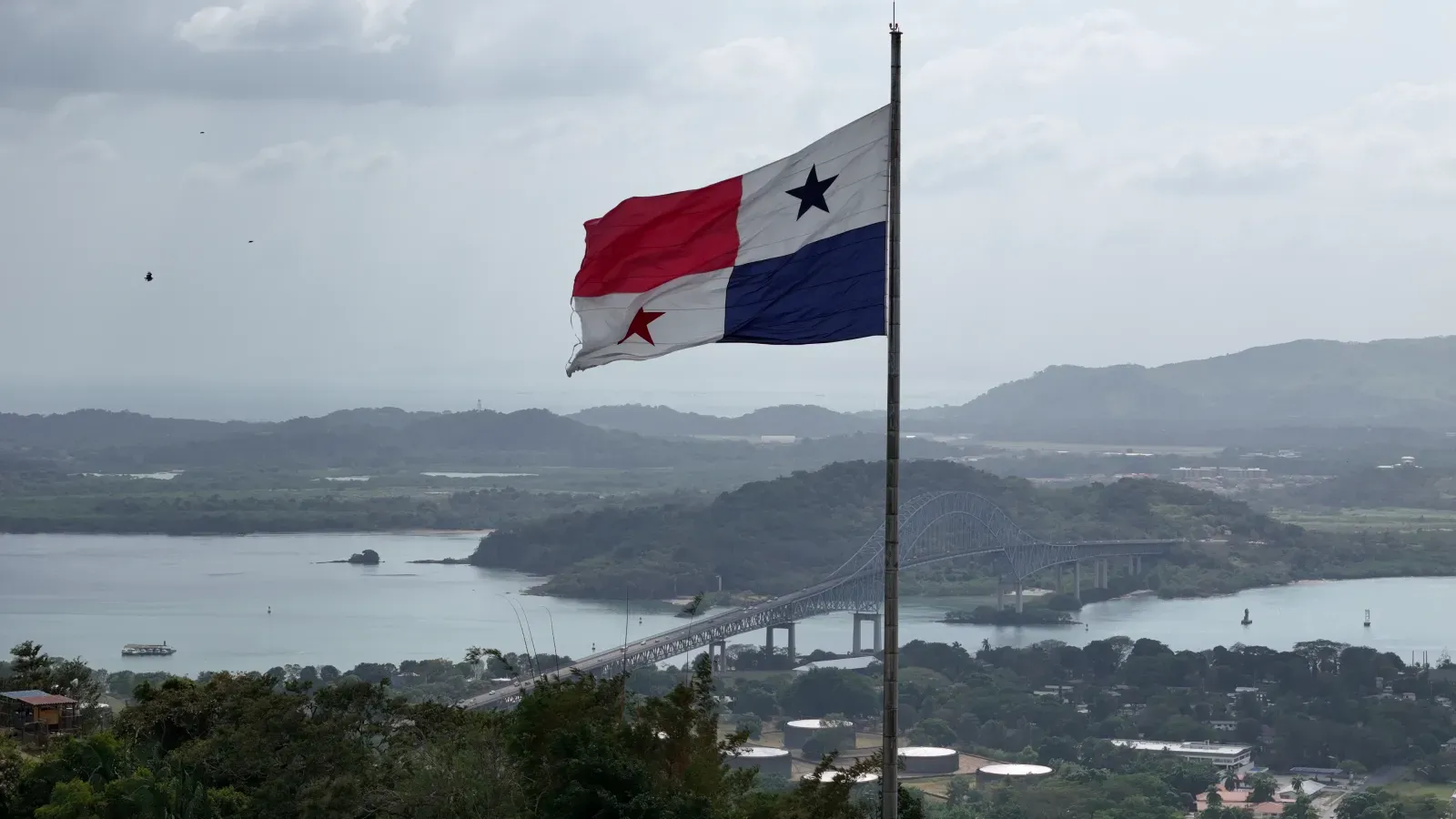
At the top, the large Panamanian flag rises above the forest and turns the panorama into more than a scenic overlook. Ancón Hill brings several layers of Panama into a single view: the historic city, its modern expansion, the former Canal Zone, and the interoceanic waterway. This meeting of nature, memory, and territory defines the experience.
Explore the place
Image gallery
Photo of 5
Understand the place
History
Ancón Hill has been connected to the geography of Panama City since historical accounts surrounding the relocation of the city after the destruction of Panamá Viejo. Its elevation eventually made it a strategic vantage point overlooking the bay, the coastline, and the territory surrounding the interoceanic route.
During the United States-led construction of the Panama Canal, basalt stone was quarried from the hill for the Miraflores and Pedro Miguel locks and for the fill beneath the Canal Administration Building. The name Quarry Heights preserves the memory of this activity. Buildings linked to Canal administration were also established on its slopes, including the residence occupied by governors of the former Canal Zone.
Ancón Hill remained associated with the Canal Zone for much of the twentieth century. In 1979, when the Torrijos-Carter Treaties entered into force, the Canal Zone formally ended and the hill gained renewed importance as a visible symbol of Panama’s territorial recovery.
The Panama Municipal Council declared the hill a protected area and natural reserve through Agreement No. 157 of July 31, 2001. Executive Decree No. 104 of October 22, 2003, later declared it Heritage of the Panamanian Nation. Together, these protections recognize its environmental, historical, and symbolic significance.
Culture
The flag flying above the summit is Ancón Hill’s most recognizable cultural image. Visible from different parts of the capital, it represents the hill’s connection with Panama’s struggle for sovereignty and the recovery of territory once included in the Canal Zone. From the overlook, that history becomes tangible: modern Panama City and the former Canal area appear before visitors as parts of the same landscape.
The hill also holds an important place in Panamanian literature. Poet Amelia Denis de Icaza expressed the pain of Panama’s territorial separation in her poem “Al Cerro Ancón.” The memory of that work remains part of the site’s cultural meaning and helps explain why the hill carries significance beyond its natural landscape.
Climate
Ancón Hill experiences the warm and humid tropical conditions of Panama City’s Pacific side. The forest shades much of the route, but humidity remains noticeable during the ascent and may increase the physical effort involved. Rainfall and forest humidity are generally higher between May and December, while the first months of the year tend to receive less rain.
The hill can be visited throughout the year whenever the reserve remains open. During wetter months, check the forecast, protect personal belongings from rain, and walk carefully on damp surfaces. Early morning generally provides more comfortable hiking conditions and greater activity among birds and other wildlife.
Area and surroundings
Ancón Hill is a forested elevation rising 199 meters above sea level within an urban natural reserve of approximately 40.4 hectares. It lies in the Ancón district of Panama City, near historic sectors associated with Balboa, Quarry Heights, and the former Canal Zone administration.
The visitor experience centers on an approximately 2-kilometer paved road that climbs through vegetation toward observation points and overlooks. Near the top are the Panamanian flag, communications facilities, and views extending in several directions across the city and Canal landscape.
Although the main road is paved and officially described as low difficulty, the climb involves a continuous incline. Full universal accessibility should not be assumed until the route has been evaluated and documented specifically for that purpose.
Nature
Ancón Hill’s forest survives as a natural refuge surrounded by the capital’s urban expansion. Tropical trees and other plants along its slopes provide shade, food, and shelter for mammals, birds, reptiles, and amphibians. Its value lies not only in the number of recorded species, but also in the continued presence of a functioning forest ecosystem within a densely developed city.
Sloths, agoutis, monkeys, deer, armadillos, and butterflies may appear during the walk. Recorded birds include toucans, parakeets, hawks, vultures, and migratory species. Ancón Hill also hosts birdwatching and monitoring activities, although no individual wildlife sighting can be guaranteed.
Protecting the forest preserves this diversity and maintains a place for environmental education and everyday contact with nature. Watching animals without chasing, touching, or feeding them helps prevent the visit from changing the behavior that makes these encounters possible.
Practical tips
Begin the climb early in the morning whenever possible. Wear lightweight clothing and comfortable shoes with good traction, and carry enough water in a reusable bottle. MiAMBIENTE prohibits the entry, use, and distribution of single-use plastic and polystyrene products within protected areas.
Bring sun protection, insect repellent, and a light rain layer, particularly between May and December. Keep a comfortable pace: although the route is paved and officially rated as low difficulty, the incline, heat, and humidity can increase the effort required.
Do not ride a bicycle, motorcycle, skateboard, skates, or electric scooter inside the reserve. Pets are allowed on a leash and must remain controlled to prevent encounters with wildlife.
Do not feed, touch, or chase animals. Stay on the designated route, avoid removing plants or other natural resources, and carry all waste out with you. Hunting, logging, burning, collecting, and destroying natural resources are prohibited within the reserve.
Review recent MiAMBIENTE notices before leaving, as temporary closures, maintenance work, or access changes may occur.
How to get there
Travel to the Ancón district and use a car, taxi, or hired transportation to reach the area surrounding the public access point. MiAMBIENTE has documented walks beginning near Mi Pueblito, while the Panama Canal Authority has described access through Quarry Heights. Parking arrangements and the designated entrance may change, so follow current signs and verify temporary access measures before visiting.
The visitor route continues on foot along a paved road. Do not plan to ride uphill on a bicycle, motorcycle, skateboard, skates, or electric scooter, as these are prohibited within the reserve.
We use analytics cookies to understand which content is most useful and improve the site. They are enabled only if you accept them, and you can change your choice here. Read our
privacy policy.
Analytics cookies
They are optional and help us improve the content.
 Panamá