History
The Bahá’í Faith has been present in Panama since 1919. As the community developed, its first Local Spiritual Assembly was established in 1946, followed by the National Spiritual Assembly in 1961. This growth prepared the way for a House of Worship intended to serve Panama while also becoming a spiritual reference point for Latin America.
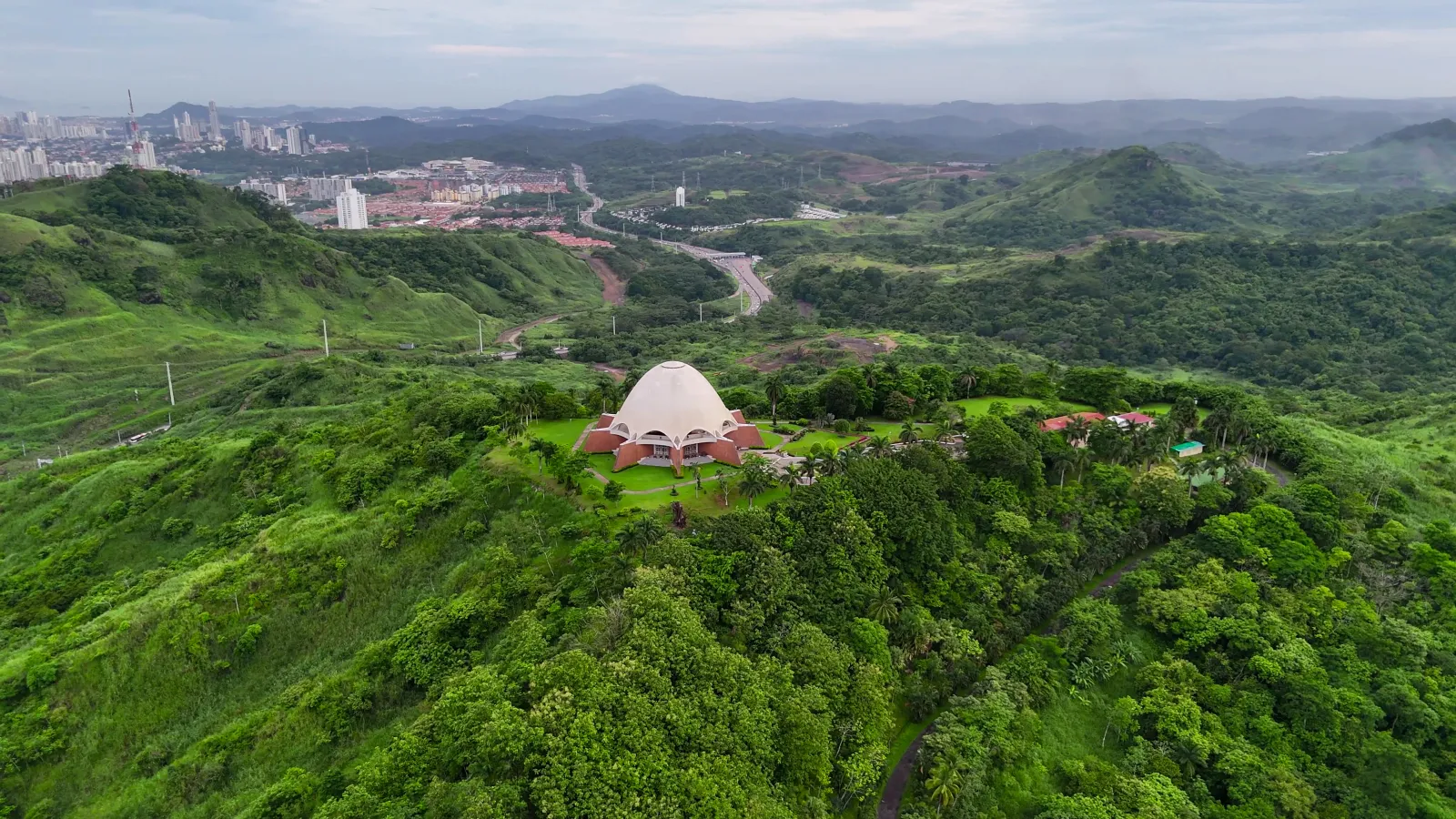
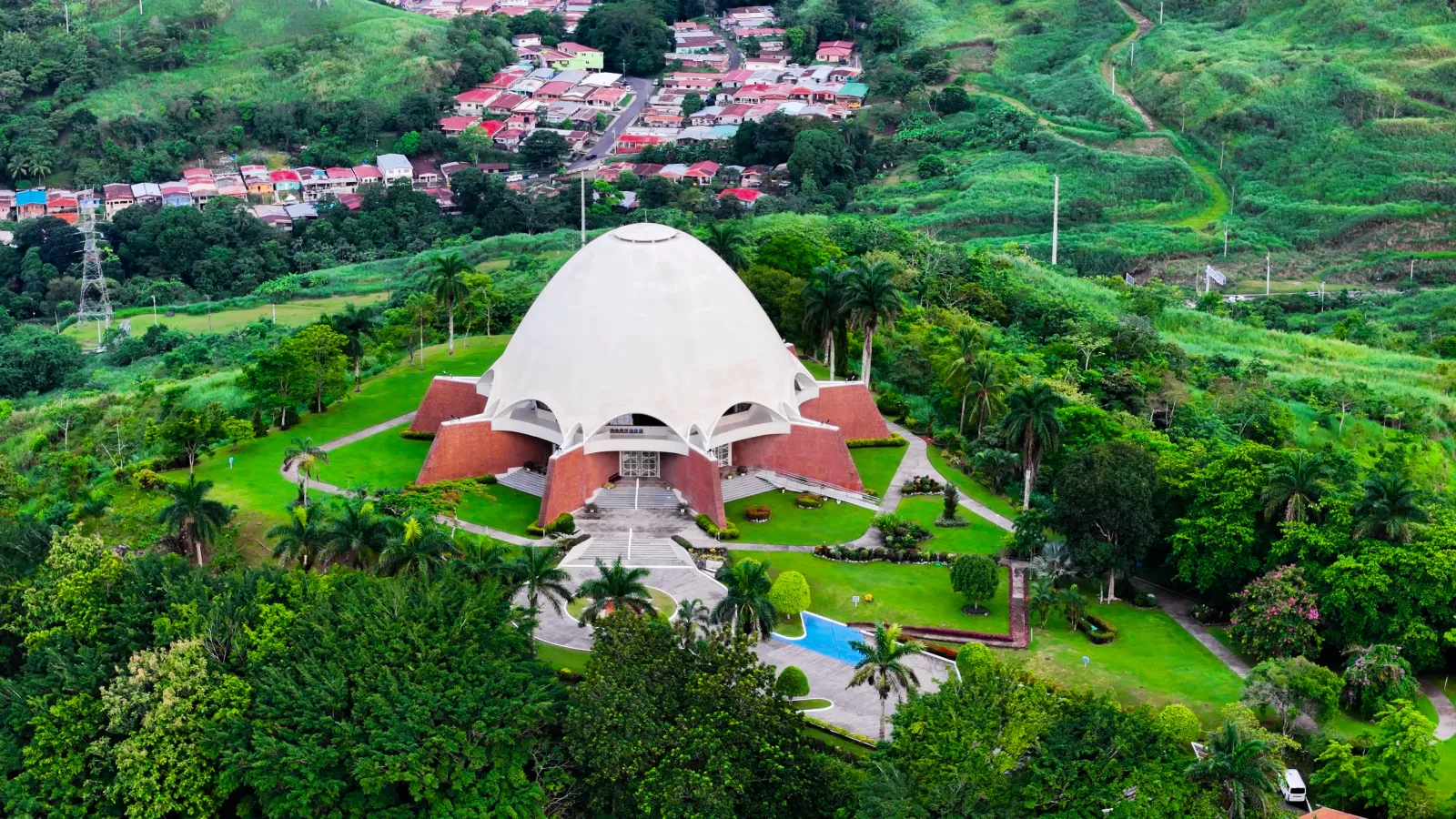
In 1967, a design by English architect Peter Tillotson was selected. His proposal took shape as a circular building crowned by a white dome and organized around nine entrances. The temple was dedicated on April 29, 1972, and received the historical designation Mother Temple of Latin America.
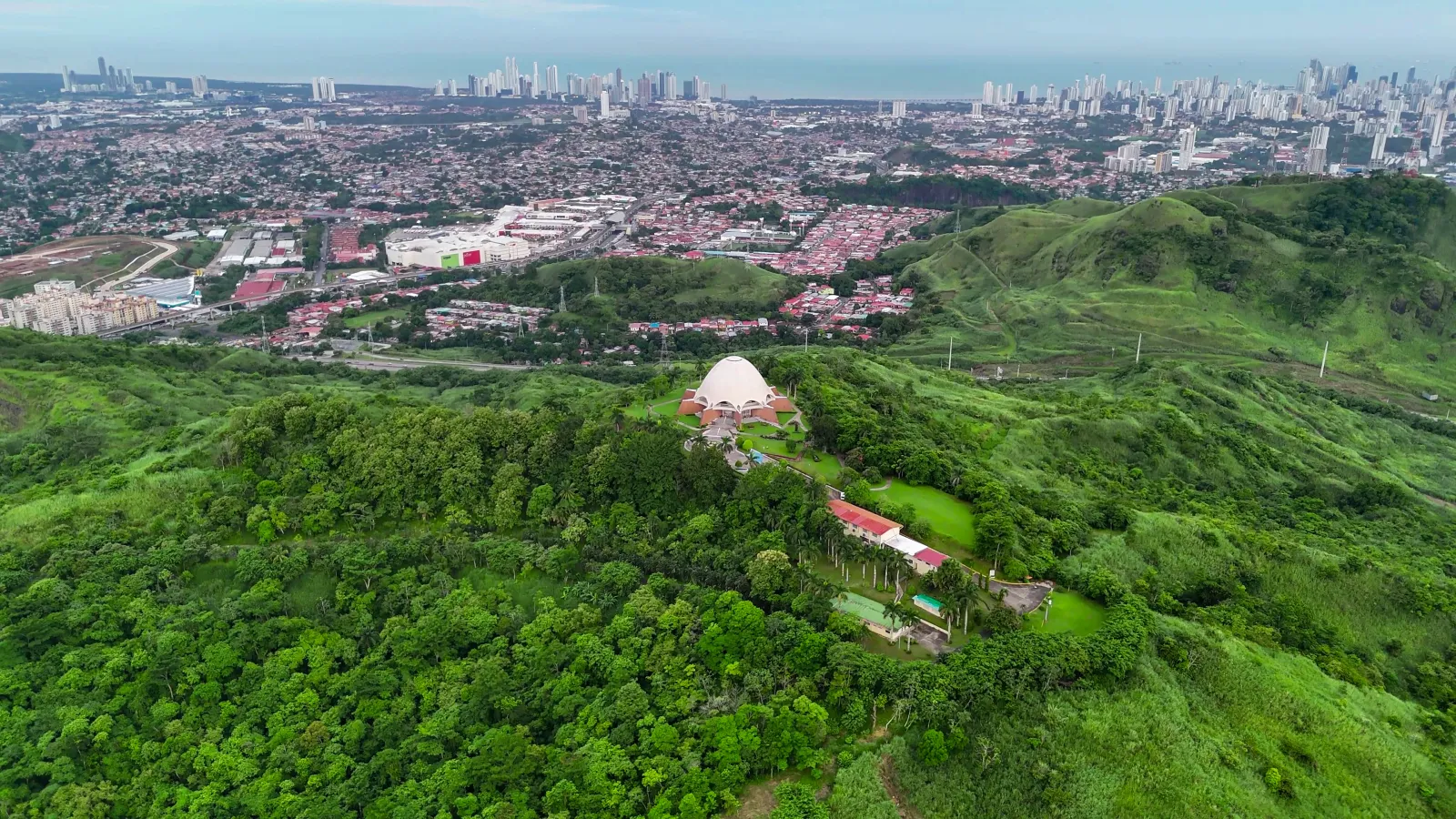
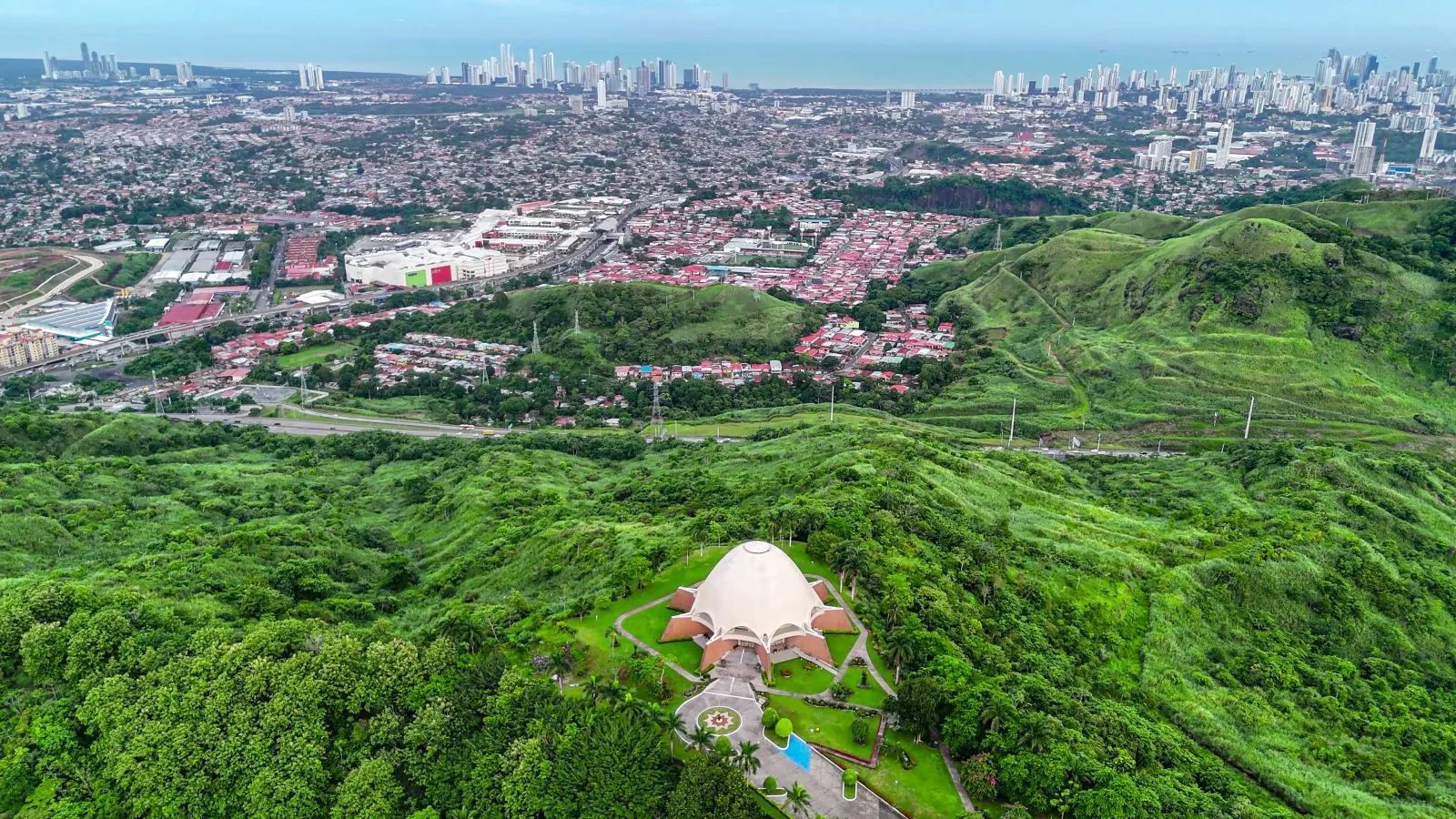
Since then, the House of Worship has maintained a dual presence in Panama’s landscape. It is a place devoted to prayer and reflection, as well as a recognizable work of modern religious architecture visible from different parts of the city. Its position on Cerro Sonsonate connects the international history of the Bahá’í Faith with Panama’s cultural and urban development.
Culture
The temple’s identity comes from the Bahá’í vision of creating places of prayer open to all humanity. Visitors do not need to belong to the Bahá’í Faith to enter, sit inside the worship hall, or respectfully take part in a moment of reflection. This openness allows people of different beliefs to share the space without diminishing its religious character.
The architecture also communicates part of that identity. The building has nine entrances and a circular composition that avoids establishing a single dominant doorway. Sources connected to the community also describe references to Central American pre-Columbian art in the design, incorporating regional elements into a work with an international purpose.
Devotional gatherings and community programmes form part of the life of the temple, although their schedules should be confirmed with the administration. Understanding this role allows visitors to experience the site not only as an architectural work, but as a living space dedicated to prayer, unity, and service.
Climate
The temple can be visited throughout the year according to its published schedule. Because it stands on a mountain summit, part of the experience takes place outdoors, particularly during the climb and while walking through the gardens. Rain, sunshine, and daily weather conditions may affect the comfort of the journey and the clarity of the views.
Visitors planning to walk uphill should check the forecast before departing and bring protection from either sun or rain as needed. During periods of heavy rainfall, it is advisable to confirm that access remains open and to drive carefully. Months with less rainfall do not guarantee completely dry days, so visitors should remain prepared for changing weather.
Area and surroundings
The grounds are organized around the temple at the summit of Cerro Sonsonate. The access road climbs from the San Isidro area to an elevated setting containing the religious building, gardens, and outdoor spaces intended for walking and contemplation.
The white dome forms the visual centre of the complex. Trees, landscaped areas, and viewpoints overlooking different parts of the metropolitan area surround the building. The prayer hall is the main interior space, while the gardens allow visitors to walk quietly and appreciate the relationship between the architecture and the mountain.
The lower entrance and the summit function as two clearly distinct areas. Visitors arriving by public transport must complete the uphill section from near the San Isidro station, while those travelling by car can continue along the internal road to the upper grounds.
Nature
The gardens and trees surrounding the temple soften the transition between the city and the summit of Cerro Sonsonate. Vegetation frames the dome, follows the internal paths, and creates places where visitors can pause before or after entering the prayer hall.
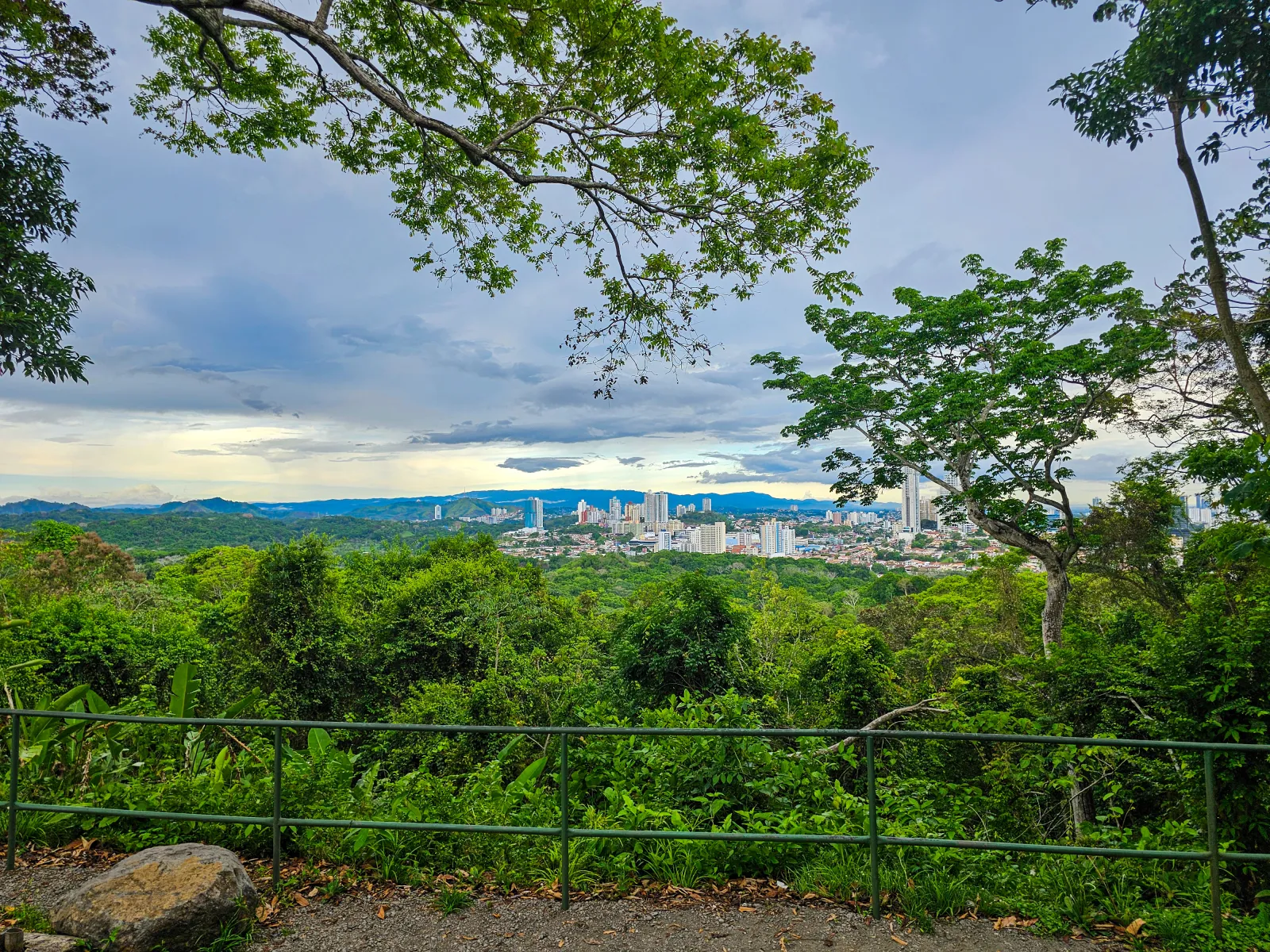
From the mountain, the contrast between developed areas, green slopes, and the metropolitan horizon becomes visible. This relationship between architecture and landscape is one of the site’s most recognizable qualities: the building is not experienced in isolation, but as part of an elevation that changes the usual perspective of the city.
Although birds and other wildlife associated with wooded spaces may be observed, the sources reviewed do not support promising any specific species or sightings. The natural value of the visit lies mainly in the gardens, vegetation, and the experience of viewing the city from a calm, elevated setting.
 Panamá